
Anyone who has spent a July afternoon in a Springfield attic or a January morning in an uninsulated pole barn knows the Ozarks climate does not do things halfway. Summers are hot and sticky, winters bring hard freezes and the occasional ice storm, and spring and fall can swing between the two in a single week. Buildings here have to handle heat, cold and humidity, often in the same month.
Spray foam insulation has become a popular choice for homes, workshops and metal buildings across southwest Missouri because it addresses all three. This guide covers how it works, where it makes the most sense and what to ask before you hire someone to install it.
Understanding the Missouri climate
Springfield and much of the surrounding region fall in climate zone 4A under the International Energy Conservation Code, a mixed-humid zone. In practical terms, a building here must keep heat in during winter and keep heat and moisture out during summer. Humidity is the part people tend to overlook. Warm, damp outdoor air that leaks into a cooler building can condense on cold surfaces, leading to mold, rot and corrosion.
Energy codes in Missouri are adopted locally, so requirements can differ between the city of Springfield, nearby towns and unincorporated parts of Greene, Christian and other counties. Check with your local building department before starting a major insulation project.
How spray foam differs from other insulation
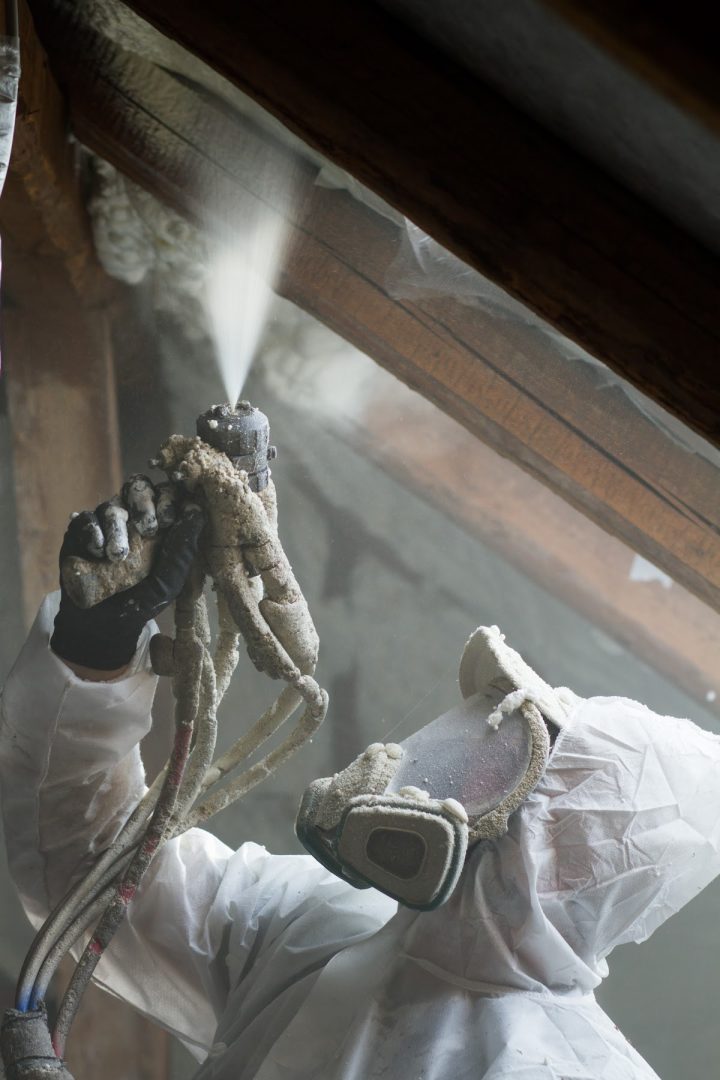
Fiberglass batts and loose-fill cellulose slow the movement of heat, but air can still pass through and around them. Spray polyurethane foam is applied as a liquid that expands and hardens in place, filling gaps, cracks and irregular cavities. That gives it two jobs at once: it insulates and it air seals. The U.S. Department of Energy lists sprayed foam among the insulation types suited to irregular spaces and to sealing air leaks.
Air leakage matters because many comfort complaints, from drafty rooms to upstairs bedrooms that never cool down, come from air moving through the building envelope rather than heat passing through solid walls. Stopping that air movement also cuts down on dust, pollen and outside noise.
Open-cell versus closed-cell foam
Spray foam comes in two main types, and choosing between them is the most important decision in the project.
Open-cell foam
Open-cell foam is soft and spongy, with tiny cells that are not fully closed. It expands a great deal during application, which makes it good at filling cavities and wrapping around wiring and plumbing. It is an effective air barrier and absorbs sound well, which is why it often goes into interior walls and between floors. It costs less per inch than closed-cell, but it offers lower insulating value per inch and allows water vapor to pass through.
Closed-cell foam
Closed-cell foam is dense and rigid. Its cells are sealed, so it delivers more insulating value per inch, resists water and acts as a vapor retarder at sufficient thickness. It also adds stiffness to walls and roof panels. It costs more per inch, but in tight spaces or areas exposed to moisture, such as crawlspaces, rim joists, basements and metal buildings, its performance often justifies the price.
Many projects use both: closed-cell where moisture control or added strength matters, and open-cell where there is room for depth and sound control is a bonus.
Where spray foam pays off in Ozarks homesAttics
Homeowners have two basic choices. The traditional approach insulates the attic floor and keeps the attic vented. The alternative sprays foam to the underside of the roof deck, creating an unvented, conditioned attic. That second approach is especially useful when ductwork or an air handler sits in the attic, because the equipment then runs in a space close to indoor temperature instead of a summer oven. Converting to an unvented attic changes how the roof assembly handles moisture, so it should be designed to meet local code, and your installer should explain how vapor will be controlled under the roof sheathing.
Crawlspaces
Crawlspaces are common in older homes around the region, and many of them are damp. Vented crawlspaces can draw humid summer air underneath the house, where it meets cool surfaces and condenses. Sealing the vents, laying a ground vapor barrier and insulating the foundation walls with closed-cell foam is one widely used way to bring the crawlspace inside the thermal envelope. Standing water or drainage problems need to be fixed first.
Rim joists and basements
The rim joist, where the floor framing sits on the foundation, is one of the leakiest parts of many houses. A layer of closed-cell foam there is a relatively small job that can make a noticeable difference to drafts and to how warm the floors feel in winter.
Pole barns, shops and metal buildings
Metal buildings are everywhere in the Ozarks, from hay barns and equipment sheds to full workshops and barndominiums. Bare steel heats up fast in the sun and chills quickly at night. The bigger issue is condensation. When warm, humid air inside the building meets the underside of a cold metal roof, it condenses and drips, a problem many owners call “sweating.” Over time, that moisture rusts fasteners and panels and damages whatever is stored below.
Closed-cell foam sprayed directly onto the inside of metal roof and wall panels addresses this by keeping warm, moist air away from the cold steel. It also seals the gaps at panel laps, eaves and ridges, quiets the drumming of rain and adds some rigidity to the building skin. For a shop you plan to heat or cool, it can make the space usable year-round.
Safety, codes and curing
Spray foam is a chemical product mixed on site, and it must be handled correctly. Occupants generally stay out of the building during application and for a period afterward, as specified by the manufacturer, while the foam cures and the space is ventilated. Building codes typically require foam in living spaces to be covered by a thermal barrier, such as drywall, and may call for an ignition barrier in attics and crawlspaces depending on the product and how the space is used. A tighter house may also need a plan for mechanical ventilation to keep indoor air healthy.
What to ask an installer
Before signing a contract, get clear answers to a few questions:
- Which type of foam do you recommend for each area, and why?
- What thickness will you install, and how will you verify it?
- What thermal or ignition barrier will be required, and is it included in the quote?
- How long should we stay out of the building after spraying?
- How will you handle moisture in the crawlspace or under the roof deck?
- Will my heating, cooling or ventilation system need adjustments afterward?
- Are you insured, and what training do your applicators have?
- Can you provide the product’s technical data sheet and warranty details?
A local contractor who knows the region’s housing stock and building departments can also tell you which approach suits your particular structure. For homeowners and shop owners in southwest Missouri, Springfield Foam Insulation is one place to learn how spray foam is applied in area homes and metal buildings.
Making the decision
Spray foam is not the right choice for every wall or every budget, but in the Ozarks it solves problems that traditional insulation struggles with, especially air leakage, humidity and condensation in metal buildings. Matching the foam type to each part of the building, planning for moisture and ventilation, and choosing an experienced installer will give you a more comfortable, efficient space that stands up to Missouri’s seasons.